Saturday, August 16, 2014

Tumeric to your health!

Turmeric


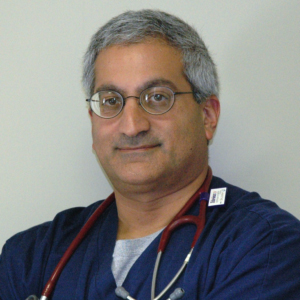
by Yusuf M. Saleeby, MD
(to be published in upcoming American Fitness magazine)


Turmeric is a rather popular herbal these days for its touted reputation at knocking down inflammation.  We know that inflammation is a major player in everything from heart disease to stroke to cancer.  Controlling inflammation for those with high levels, will yield improvements in their quality of life.  When we think inflammation we often think of painful joints, but inflammation goes way beyond these observable and overt symptoms.  Inflammation (the silent type) has been implicated in heart disease, cancer, dementia (Alzheimer’s disease), diabetes and many other disorders.  Treating inflammation naturally with turmeric makes a lot of sense.  There is evidence abound that this natural and relatively safe therapy works.

Turmeric is produced from the rhizamatous herbal Curcuma longa.  This plant belongs to the ginger family of plants called Zingiberaceae.  There are some 124 species of Curcuma, many used medicinally.  Curcuma zedoaria which is the Javanese white turmeric root while having medicinal properties of its own, should not be confused with the C. longa species that we are considering and discussing here.  So pick and choose your turmeric wisely.  Not only the plant, genus and species, but also the processing and preparation to obtain a high quality, bioavailable, final product achieving highest medicinal value must be considered.
In the 13th chapter of the book Herbal Medicine: Biomolecular and Clinical Aspects. 2nd Edition, Sahdeo Prasad and Bharat Aggarwal discuss the history of the medicinal and culinary use of turmeric dating back some 4000-years.  Some three-thousand articles appear in scientific publications over the past 25-years discussing the use of turmeric as a therapeutic in both animal and human studies.  While this short article hits some of the highlights, this book has one of the best and in-depth look at turmeric and curcumin that I have found and is quite heavily referenced for credibility. 1,2,3

HISTORY & RESEARCH:
In Ayurvedic medicine turmeric is well established for treating a variety of conditions from respiratory to liver disorders, from rheumatism to diabetic wounds.  In traditional Chinese medicine this herbal was used to treat diseases of the gastrointestinal tract. 1,2
 There are studies in the peer-reviewed scientific literature since at least 1985 showing benefit in cancer prevention, as an antioxidant, anti-mutagen, reducer of inflammation, having anti-viral, anti-fungal and anti-microbial properties.  In vivo human trials also conducted in the mid-1980’s until the present showed positive effects of turmeric against cancer, as an anti-cytotoxic agent, and an agent that protects liver cells (hepatocites).  Other studies show its ability to reduce cataracts and showing properties of reduction in serum glucose in diabetics.4,5   Other studies showed neuroprotection, improved healing in wounds and ulcers, as an adjuvant arthritis treatment.  There are even reports of positive effects in atherosclerosis and lipid oxidation reduction.5   A Chinese journal even reports positive effects in respiratory disorders and asthma.6
Turmeric is traditionally prescribed for upset stomach (dyspepsia) at about 500 mg four times daily.  As an anti-inflammatory for osteoarthritis (OA) the dose is usually different.  One study used a specific product called Meriva, (www.phytosomes.info/public/meriva.asp) for a study on arthritis.7 

Those suffering from rheumatoid arthritis (RA) have a slightly different maintenance dose.  A published report utilized a specific formulation of the turmeric constituent, curcumin (BCM-95®, www.bcm95.com).  This proprietary preparation of turmeric is apparently seven-times more bioavailable than the usual commercially available turmeric compounds.8   A 2014 article published on the use of turmeric in a head to head study against a traditional NSAID (ibuprophen/ Motrin®) showed equal or even better reductions in pain and inflammation and lower incidents of adverse events with turmeric.9
Not only the dose, but the preparation is often important with regard to disease and severity of symptoms.10

PRECAUTIONS:
A few precautions should be mentioned with regard to this spice.  When Turmeric is consumed in the lower doses associated with food consumption it is relatively safe.  However, when used medicinally, larger doses are prescribed and needed to achieve a therapeutic effect.  Supplements contain up to 500 mg per tablet or capsule in general and are prescribed to be taken up to four times a day.  That is around 2000 mg as a therapeutic dose.  Doses this high have the ability to lower blood glucose and blood pressure.11,12  So those on diabetic and BP meds must be careful. 
Turmeric also thins the blood and can cause excessive bleeding when paired with other herbals or drugs with similar properties.  Caution should also be taken with certain medications that can alter a person’s liver metabolism.  Co-administration with agents such as aspirin, warfarin (Coumadin®), non-steroidals and anti-platelet drugs should warrant careful observation and monitoring.  Additionally, herbals such as angelica, clove, Danshen, garlic, ginger and Ginkgo biloba, ginseng and willow root can cause bruising and bleeding.  A National Institute of Health web site reports concerns of turmeric use and gallbladder disease.  Gallstones and bile duct obstruction with turmeric use can worsen.13,14   In pregnancy, turmeric can promote uterine bleeding, so it is not advised in the pregnant and nursing mothers.15

ACTIVE COMPOUNDS:
Turmeric contains over 100 components after intense phytochemical analysis by researchers, but the main root extracts of interest are the volatile oils containing turmerone and the coloring agents called curcuminoids.  Volatile oils include d-α-phellandrene, d-sabinene, cinol, borneol, zingiberene, and sesquiterpenes.  Curcuminoids consist of demethoxycurcumin, 5’-methoxycurcumin and dihydrocurcumin, all being natural antioxidants and possessing potent pharmacological properties.  Turmeric happens to be a good source of the omega-3 fatty acid and αlpha-linolenic acid, both sharing anti-inflammatory and anti-oxidant properties and useful in maintaining health.  Some components are beneficial at enhancing the immune system, while others essentially kill cancer cells.16,17,18

PREPARATION:
Before turmeric can be used the rhizomes must be processed.  Whether for medicinal use or as a culinary spice, the hard rhizomes are first boiled or steamed in an alkaline environment.  Traditionally, in India the process involved earthenware filled with water and the rhizomes and covered with leaves and a layer of cow dung.  The ammonia in the cow dung reacts with the turmeric to produce the final product.  For obvious hygienic reasons this method today is discouraged, in place of the manure, sodium bicarbonate is used to achieve about a 0.1% alkaline water solution.  Boiling lasts between 40-minutes to 6 hours depending on the region and method of preparation.  Once in a powder form the coloration remains indefinitely, but the flavor and medicinal potency diminishes with time and sun exposure.1

MEDICINAL USES:
The beneficial effects of turmeric over a 4000-year history were historically achieved through simple dietary intake with food consumption.  Health benefits were realized even at low doses, over protracted periods of time.  The activities and used in medicine of the golden spice turmeric include antibacterial and antiviral activity, anti-inflammatory, antitumor and antioxidant properties, and for many years in regional traditional medicine it saw heavy use as a digestive system aid.2,3   Turmeric has been shown to exhibit antiseptic properties, cardioprotective, hepatoprotective and nephroprotective effects in contemporary research studies.19  Some believe it to impart radioprotective protections as well.20

In closing, the ubiquitous golden-yellow spice found throughout India in curried dishes has proven itself quite a safe and useful medicinal herbal.  When used correctly in the proper form and dose, it can impart healing properties on a wide range of human disorders.

-----
Yusuf M. Saleeby, MD is an integrative age management physician.  He has authored a book on Adaptogen Herbs and most recently a chapter in a 2014 publication on Hypothyroidism.  He is a regular contributor to American Fitness magazine.  He exhausts gentle integrative treatment modalities before the consideration of pharmaceuticals in his clinical practice.  For more information visit www.saleeby.net.


Turmeric is helpful in:

Ø  Reducing inflammation and pain in arthritis conditions.  A clear winner in a recent clinical trial going up against Motrin®.9

Ø  Reducing pain and inflammation in Rheumatoid Arthritis.21


Ø  Reduces the risk and occurrence of dementia (Alzheimer’s Disease).  New studies demonstrate a very useful therapy in preventing neurodegenerative disease.12,22

Ø  Reducing cataracts in diabetics.23


Ø  Reducing serum glucose levels in those with insulin resistance and diabetes.24

Ø  Reducing blood pressure in those with elevated BP (hypertension).25

Ø  Improvement in erectile function (ED) in men.  More effective and safer than Viagra®.26


©2014


References:

1.       Prasad S, Aggarwal BB. Turmeric, the Golden Spice: From Traditional Medicine to Modern Medicine. In: Benzie IFF, Wachtel-Galor S, editors. Herbal Medicine: Biomolecular and Clinical Aspects. 2nd edition. Boca Raton (FL): CRC Press; 2011.

2.       Krishnaswamy K. Traditional Indian spices and their health significance. Asia Pac J Clin Nutr. 2008;17 Suppl 1:265-8.

3.       Pari L, Tewas D, Eckel J. Role of curcumin in health and disease. Arch Physiol Biochem.2008;114(2):127-49.

4.       Miyakoshi M, Yamaguchi Y, Takagaki R. et al. Hepatoprotective effect of sesquiterpenes in turmeric. Biofactors. 2004;21:167–70.

5.       Araújo CC, Leon LL. Biological activities of Curcuma longa L., Mem Inst Oswaldo Cruz. 2001 Jul;96(5):723-8.

6.       Li C, Li L, Luo J, Huang N. [Effect of turmeric volatile oil on the respiratory tract]. Zhongguo Zhong Yao Za Zhi. 1998 Oct;23(10):624-5.

7.   Belcaro G, Cesarone MR, Dugall M, et al. Efficacy and safety of Meriva, a curcumin-phosphatidylcholine complex, during extended administration in osteoarthritis patients. Alt Med Rev, 2010:15:337-4.

8.       Antony B, Merina B, Iyer V S, Judy N, Lennertz K, Joyal S. A pilot cross-over study to evaluate human oral bioavailability of BCM-95® CG (BiocurcumaxTM), a novel bioenhanced preparation of curcumin . Indian J Pharm Sci, 2008;70:445-9.

9.       Kuptniratsaikul V, Dajpratham P, Taechaarpornkul W, Buntragulpoontawee M, Lukkanapichonchut P, Chootip C, Saengsuwan J, Tantayakom K, Laongpech S. Efficacy and safety of Curcuma domestica extracts compared with ibuprofen in patients with knee osteoarthritis: a multicenter study. Clin Interv Aging. 2014 Mar 20;9:451-8.

10.   Jäger R, Lowery RP, Calvanese AV, Joy JM, Purpura M, Wilson JM. Comparative absorption of curcumin formulations. Nutr J., 2014 Jan 24;13:11.

11.   Chuengsamarn S, Rattanamongkolgul S, Luechapudiporn R, Phisalaphong C, Jirawatnotai S. Curcumin extract for prevention of type 2 diabetes. Diabetes Care. 2012 Nov;35(11):2121-7.

12.   Ringman JM, Frautschy SA, Cole GM, Masterman DL, Cummings JL. A potential role of the curry spice curcumin in Alzheimer's disease. Curr Alzheimer Res., 2005 Apr;2(2):131-6.

13.   Rasyid A, Rahman AR, Jaalam K, Lelo A. Effect of different curcumin dosages on human gall bladder. Asia Pac J Clin Nutr., 2002;11(4):314-8.

14.   National Institutes of Health MedlinePlus:  Turmeric. http://www.nlm.nih.gov/medlineplus/druginfo/natural/662.html (accessed 8/22/2014)

15.   Turmeric. University of Maryland’s Medical Reference Guide.  http://umm.edu/health/medical/altmed/herb/turmeric (accessed 8/22/2014)

16.   Ruby A. J, Kuttan G, Babu K. D, Rajasekharan K. N, Kuttan R. Anti-tumour and antioxidant activity of natural curcuminoids. Cancer Lett., 1995;94:79–83.

17.   Selvam R, Subramanian L, Gayathri R, Angayarkanni N. The anti-oxidant activity of turmeric (Curcuma longa). J Ethnopharmacol., 1995;47:59–67.

18.   Ahmed Hamdi OA, Syed Abdul Rahman SN, Awang K, Abdul Wahab N, Looi CY, Thomas NF, Abd Malek SN. Cytotoxic Constituents from the Rhizomes of Curcuma zedoaria. Scientific World Journal, 2014;2014:321943.

19.   Gilani AH, Shah AJ, Ghayur MN, Majeed K. Pharmacological basis for the use of turmeric in gastrointestinal and respiratory disorders. Life Sci., 2005 May 13;76(26):3089-105.

20.   Araújo MC, Dias FL, Takahashi CS. Potentiation by turmeric and curcumin of gamma-radiation-induced chromosome aberrations in Chinese hamster ovary cells. Teratog Carcinog Mutagen. 1999;19(1):9-18.

21.   Chandran B, Goel A. A randomized, pilot study to assess the efficacy and safety of curcumin in patients with active rheumatoid arthritis. Phytother Res., 2012 Nov;26(11):1719-25.

22.   Baum L, Lam CW, Cheung SK, et al. Six-month randomized, placebo-controlled, double-blind, pilot clinical trial of curcumin in patients with Alzheimer disease (letter). J Clin Psychopharmacol, 2008;28:110-3.

23.   Grama CN, Suryanarayana P, Patil MA, Raghu G, Balakrishna N, Kumar MN, Reddy GB. Efficacy of biodegradable curcumin nanoparticles in delaying cataract in diabetic rat model. PLoS One. 2013 Oct 14;8(10):e78217.

24. Dong-wei Zhang, Min Fu, Si-Hua Gao, and Jun-Li Liu, Curcumin and Diabetes: A Systematic Review, Evidence-Based Complementary and Alternative Medicine, vol. 2013, Article ID 636053.

25.   Khajehdehi P, Zanjaninejad B, Aflaki E, Nazarinia M, Azad F, Malekmakan L, Dehghanzadeh GR. Oral supplementation of turmeric decreases proteinuria, hematuria, and systolic blood pressure in patients suffering from relapsing or refractory lupus nephritis: a randomized and placebo-controlled study. J Ren Nutr. 2012 Jan;22(1):50-7.

26.   Zaahkouk AM, Abdel Aziz MT, Rezq AM, Atta HM, Fouad HH, Ahmed HH, Sabry D, Yehia MH. Efficacy of a novel water-soluble curcumin derivative versus sildenafil citrate in mediating erectile function. Int J Impot Res. 2014 Aug 7.

Wednesday, August 6, 2014

new book on hypothyroidism features Dr. Saleeby


STOP THE THYROID MADNESS II is COMING!!

As the first STTM book is a compilation of patient experiences and wisdom concerning successful thyroid treatment, STTM II brings you the wisdom and intelligence of several well-chosen medical practitioners with a focus on the integrative and functional approach to treating thyroid disease! See below who the authors are (click on each one to see a bio) and below that are the chapters!
CLOSE

Dr. Yusuf (JP) Saleeby, MD

Dr. Yusuf (JP) Saleeby, MD is an integrative medical practitioner who treats hypothyroid patients and those likely overlooked with subclinical hypothyroidism with standard and non-conventional therapies.  He authored a book on specialty medicinal herbs Wonder Herbs: A guide to three adaptogens (2006)…
 Read more about Dr. Yusuf (JP) Saleeby, MD
STTM II takes you deeper into certain subjects. See the chapter titles below.

FOREWORD

by David Brownstein, MD

INTRODUCTION

by Janie A. Bowthorpe, M.Ed.

CHAPTER 1

The Integrative and Functional Medicine Approach to Thyroid Diseases
by James Yang, MD, MPH and Andrew Heyman, MD, MHSA

CHAPTER 2

Stress, Adrenals, Your Thyroid and You
by Laura R Stone MD, Andrew Heyman, MD MHSA
and Carla Heiser, MS RD LD

CHAPTER 3

Thyroid Replacement Therapy: Natural Desiccated Thyroid (NDT)
by Yusuf (JP) Saleeby, MD

CHAPTER 4

The Unreliable TSH Lab Test.
by Jeffrey Dach, MD

CHAPTER 5

When Normal Ain’t Normal
by Geoffrey T. Bouc, MD

CHAPTER 6

Nutrition and Hypothyroidism
by William D. Trumbower, MD

CHAPTER 7

Hashimoto’s Autoimmune Thyroid Disease
by Jeffrey Dach, MD

CHAPTER 8

Why Are Doctors Like That?
by Nguyen D. Phan, MD

CHAPTER 9

Gluten Intolerance and Thyroid Disease
by Paula Luber, MD

CHAPTER 10

Thyroid Toxicity
by Philip L. Roberts, MD

CHAPTER 11

Moving Forward with Reverse T3:
the Causes and Health Implications.
by Paige Adams FNP, B-C

CHAPTER 12

Methylation, MTHFR and Thyroid Dysfunction
by Benjamin Lynch, ND

Chapter 13

Hypocortisolism: An Evidence Based Review
by Lena D. Edwards, MD, FAARM, FICT;
Andrew H. Heyman, MD MHSA; Sahar Swidan, PharmD

Thursday, July 25, 2013

Nobel Prize and recognition denied due to early death from ovarian cancer

Google doodle honors birthday of biophysicist Rosalind Franklin

British X-ray crystallographer made great strides in our understanding of the molecular makeup of DNA and RNA but missed out on Nobel Prize.
Google doodle honoring Rosalind Franklin.
(Credit: Google)
Google devoted its doodle on Thursday to mark the 93rd birthday of Rosalind Franklin, a British biophysicist and X-ray crystallographer who made great strides in our understanding of the molecular makeup of DNA and RNA but missed out on the Nobel Prize.
British biophysicist Rosalind Franklin.
(Credit: Jewish Chronicle Archive/Heritage-Images)
Born in London on July 25, 1920, Franklin showed exceptional scholastic aptitude at an early age. After studying chemistry at Cambridge, Franklin went to work as a research associate at King's College London in the Medical Research Council's Biophysics Unit. During her tenure at King's College, she captured X-ray diffraction images of DNA that led to the discovery of the DNA's double helix. Her data was the basis for a 1953 hypothesis regarding the structure of DNA that led to the 1962 Nobel Prize.
Franklin died of ovarian cancer in 1958 at age 37 and was ineligible for Nobel Prize nomination in 1962. The honor was bestowed on Francis Crick, James Watson, and Maurice Wilkins based on their work contributing to the understanding of nucleic acids and not exclusively for their DNA structure discoveries. However, Crick wrote in 1961 that Franklin's data was "the data we actually used" to formulate their hypothesis on the structure of DNA.
While her exposure to X-ray radiation is sometimes linked to the illness that killed her, other members of her family have died of cancer.
Franklin's studies also contributed to the understanding of the molecular structures of viruses, coal, and graphite.
Google's doodle represents Franklin gazing at the double helix structure of DNA with an image of the X-ray diffraction image of DNA (known as Photo 51) at the end.

Saturday, July 6, 2013

New Medical Office in Murrells Inlet. Dr. JP Saleeby now accepting New Patients

Accepting patients.

For more information on General Preventive Care. Full service General Practice in the Myrtle Beach area. If you were seen by Dr. Saleeby at another center and have labs, x-rays pending for review. If you are a bHRT patient needing follow up, please call the toll free number to schedule an appointment.www.PriorityHealthSC.com

Office location 637-C Bellamy Ave, Murrells Inlet, SC. Call to arrange appointments now
800-965-8482.


General Practice and Preventive Integrative Medicinewww.PriorityHealthSC.com

Saturday, June 1, 2013

Oolong Tea story

One night long ago mother moon  beheld a beautiful scarlet comet burning in the sky where before had been only darkness. It seemed to her the most wondrous thing she had ever seen.
“Who are you?” she cried.
“I am Hong Long, the red dragon. I have traveled far and am weary but yet I have far to go, for indeed my journey never ends.”
Mother moon felt great pity for the handsome stranger and her heart opened to him. “Hong Long,” she said, “Why not stay with me for a while? I am lonely and you are tired. Let us comfort each other”
“Alas, I cannot linger for it is my fate to wander.” Said Hong Long, “But while I am in your sky I would be happy to have your company.”
And so it happened that for many weeks Mother Moon and the comet kept each either company. Hong Long told her stories of his travels and the wonders he had seen. Mother Moon shared her love of mankind, whom she watched over every night, and long did they laugh at the silly things people did as they rushed through their fleeting lives. In time, as is natural, Mother Moon and Hong Long fell in love.
But far too soon Hong Long had passed through Mother Moon’s sky and was on the far side of the night. Mother Moon confessed her love to Hong Long and he admitted he felt the same. “Must you really leave?” pleaded Mother Moon.
“I truly wish I could stay.” Said Hong Long, “But I am as God made me. I must continue my journey or I die.”
“Either way I would lose you,” sighed Mother Moon, “So, choose life and go your way.” As she spoke these words Hong Long passed from her sky and she saw him no more.
In sorrow, Mother Moon turned her attention to the Earth down below. As she glanced down a single white tear fell from her eye.  Below a tea bush was opening her leaves to feel the night breeze. Mother Moon’s tear fell directly on her. The tea bush was suffused with simultaneous feelings of love and unbearable sadness.
Ever since then the tea from that bush and her children has had a unique silky sweet essence that man in his ignorance called “milk” for he had no other word to describe this sensation. But we know it is really tears of longing that fell from the moon.
So goes the story of how milk oolong (called on our site Golden Lily Oolong) came to be.
 
Ralph Kenney - Owner & Founder
The Immortalitea Company
The Immortalitea Company, 965 Wilson Blvd., Unit1121, El Dorado Hills, CA 95762, USA

Monday, May 27, 2013

www.saleeby.net web portal is launched with new face

Check out the new face of www.saleeby.net it is the new updated version of the Saleeby web portal. Bill Sever my webmaster redesigned and incorporated the old ''Flash" version opening page into a secondary link and created a new Front Page that illustrates more of what Dr. Saleeby is doing these days and associated health and wellness links. Check it our and leave a comment. A special prize to anyone who can find the hidden "typo" within the contents of the first page.

Tuesday, May 21, 2013

US vs Chinese Doctor Burnout Study

Chinese vs US Docs: Comparing Burnout and Lifestyle

Carol Peckham
May 15, 2013

Comparing Chinese and US Physicians on Lifestyle and Burnout

In an interesting collaboration, Medscape shared the questions in its 2013 lifestyle and burnout survey with DXY (www.dxy.cn), which is China's largest online academic portal for physicians and life-science professionals. DXY was established in 2000 and currently has over 3 million registered members and average daily page views of 1.8 million. In this comparison, Medscape and DXY sought to identify differences in how US and Chinese physicians perceive their lifestyles and their experience of burnout.
The first interesting observation to emerge was the large proportion of younger physicians who responded to the DXY survey. Only about 6% of the approximately 6000 Chinese respondents were over age 45. This higher rate of younger physicians is the result of major expansion in Chinese college/university enrollment since 1998, producing dramatic growth in the number of certified Chinese physicians over the past decade. In order to make a reasonable comparison with the Medscape survey results, then, only US physician respondents younger than age 45 were included in the analysis, which totaled about 7500.
There was also a challenge in comparing specialties; a third of the respondents to the DXY survey reported that they were involved in Chinese traditional medicine or a mix with standard medicine. Another 24.1% said that they were internists. The assumption was that these groups taken together would be considered primary care, for a total of 57%. On the US side, a quarter of the respondents reported being family physicians (12%) or general internists (13%). The remainder practiced in subspecialty areas. There was also a slight difference in the proportion of men and women: 32% of Chinese respondents were women compared with 41% of US respondents.

Burnout and Its Causes

Major differences exist between the 2 physician populations in their responses to the questions about burnout. Both groups were given the same definition: "Do you suffer from burnout, defined as loss of enthusiasm for work, feelings of cynicism, and a low sense of personal accomplishment?" Of those who responded, 82% of Chinese physicians said that they were burned out compared with 42% of US physicians.

Burnout Severity

In regard to the severity of burnout, it was difficult to compare the responses because the questions were phrased differently. US physicians were asked to rate their burnout on a scale of 1 to 7, where 1 = "it does not interfere with my life" and 7 = "it is so severe that I am thinking of leaving medicine altogether." Their responses, with a mean of 3.65, were as follows:
 1 (6%)
 2 (19%)
 3 (24%)
 4 (21%)
 5 (17%)
 6 (7%)
 7 (5%)
Chinese respondents were given 4 options to choose from:
 It is manageable and I'm not making any changes (36%)
 It is manageable but I need to make some changes in hours/workload/etc. (52.2%)
 I am thinking of leaving my current position (7.3%)
 I am thinking of leaving medicine altogether (4.5%)
We somewhat arbitrarily matched up the answer options:
US options 1 and 2 = Chinese option 1
US options 3-5 = Chinese option 2
US option 6 = Chinese option 3
US option 7 = Chinese option 4
We then created a table that offered a rough comparison (Table 1). The percentages indicate that although burnout rate is extremely high in China, few Chinese (and US, for that matter) physicians are planning on making any major changes.
Table 1. Severity of Burnout
OptionsChineseUS
It is manageable and I'm not making any changes36%25%
It is manageable but I need to make some changes in hours/workload/etc.52.2%62%
I am thinking of leaving my current position7.3%7%
I am thinking of leaving medicine altogether4.5%5%
 

Causes of Burnout

When asked about the top causes of burnout, again the questions were posed differently, with US physicians asked to rank each stressor on a score of 1 to 7, where 1 = very unimportant and 7 = extremely important. Chinese physicians were given the same options but were asked to choose the top 5 and rank them in order from most to least important. The Chinese survey also excluded 3 options. Therefore, instead of providing numeric values, Table 2 simply lists the most to the least significant stressors for each group, according to the results of each survey. Insufficient income is the number-one stressor for Chinese physicians, and long hours at work are important causes of burnout for both groups.
Table 2. Causes of Burnout for US and Chinese Physicians, Ranked Most to Least Important
United StatesChina
Too many bureaucratic tasks*Income not high enough
Spending too many hours at workSpending too many hours at work
Income not high enoughLack of professional fulfillment
Feeling like just a cog in the wheel*Too many difficult patients
Too many difficult patientsInability to provide patients with the quality care they need
Lack of professional fulfillmentCompassion fatigue (overexposure to death, violence, and/or loss in patients)
The present and future impact of Affordable Care Act*Difficult colleagues or staff
Inability to provide patients with the quality care that they needDifficult employer
Difficult colleagues or staffIncreasing computerization of practice
Difficult employer 
Increasing computerization of practice 
Compassion fatigue (overexposure to death, violence, and/or loss in patients) 
*These options did not appear in the Chinese survey.

Income Disparities

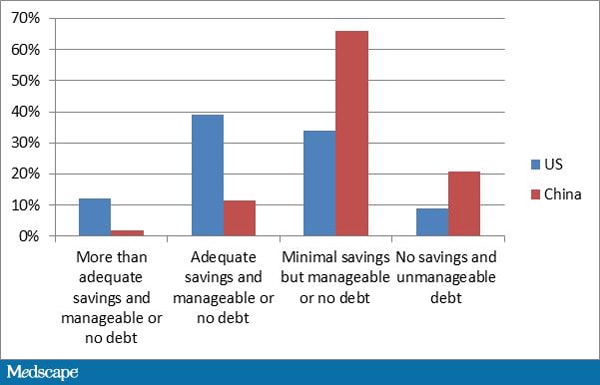
The difference in income in these 2 populations, as reflected in a question about savings and debt, is significant (Figure 1). Among US physicians, 43% report that they have either minimal or no savings, compared with 87% of Chinese physicians. Only 13% of the latter have adequate savings or more, compared with 51% of US physicians. Chinese physicians make far less than their US counterparts. Reports have given official monthly salary ranges for Chinese physicians of 3500 to 10,000 yuan ($560 to $1600).[1,2] Although Chinese physicians make far more than the average worker, they still make less than other professionals. For example, pharmaceutical sales reps can earn 2 or 3 times more than a physician. As a result, many Chinese physicians supplement their income with industry kickbacks. According to a 2010 Lancet article,[3] in the mid-1980s, when the socialist economy was reformed into a more market-driven system, hospitals lost public funding and physician income declined. To compensate for lost revenue, hospitals and physicians were allowed incentives from industry. The unfortunate consequence was the overprescribing of certain drugs and diagnostic tests and an increase in healthcare costs. For example, 75% of Chinese patients with a common cold are prescribed antibiotics, compared with the international average of 30%. China is currently experimenting with different payment methods for providers along with organizational changes to reform the current system.[3]


Figure 1. Savings and debt.

Patient Relationships

Difficult Patients

Chinese physicians ranked "difficult patients" high on their list of burnout causes. Changes in the healthcare system have caused deterioration in physician-patient relationships over recent decades. The most dramatic example of this is increased violence, including homicide, toward physicians by patients or their families. Negative media coverage and the belief that doctors are corrupted by pharmaceutical kickbacks have played a major role in precipitating these events.[4,5] In a previous survey of Chinese physicians, 66% reported that their hospitals encountered 1 to 3 medical disputes per month. In that survey, 78% blamed the tension between patients and physicians on the lack of government funding to hospitals, and 70% placed the blame on negative reports from the public media.[6] A recent article published in the American Journal of Medical Quality offered guidance on preventing and handling violence in hospitals.[7]

Domestic Status

When asked where they were happiest, 60.6% of Chinese physicians indicated at home, 6% at work, and a third in both places. This question was not asked in the 2013 US survey, but it did appear in the 2012 survey, where 46.1% of US physicians said that they were happiest at home, 4.3% at work, and 49.6% in both places. Both the US and the Chinese 2013 surveys requested physicians to rate their happiness at home on a scale of 1 (very unhappy) to 7 (very happy). Although the majority of Chinese physicians preferred home to work, they scored their happiness at home as only 3.4, compared with 5.5 for US physicians. Chinese physicians' mean satisfaction score at work was only slightly lower (3.3) and it was much lower than that of their US counterparts (4.8).
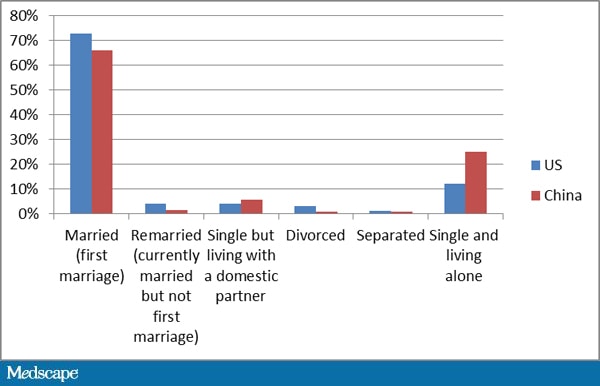
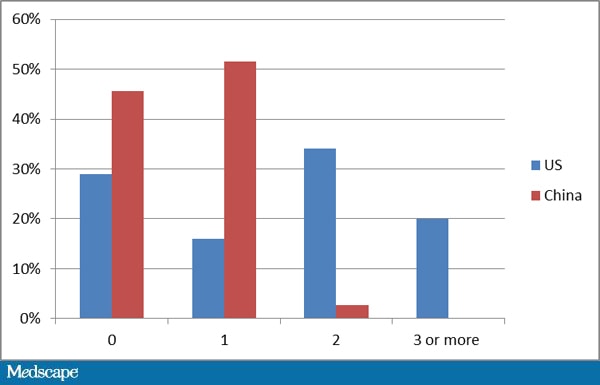
Chinese physicians are more likely to live alone than their US peers (27% vs 16%), which might contribute to their lower satisfaction with home life (Figure 2). They also have far fewer children (Figure 3), a rate that is not limited to this profession, given China's 32-year 1-child-only policy. (There are indications that this policy may be changing.[8])


Figure 2. Domestic status.


Figure 3. Number of children.

Vacations, Volunteering, and Religiosity

Vacations

Regarding the kinds of vacations that physicians take, although the options were the same for both groups, the questions were posed differently, with US physicians able to choose as many as they wanted and Chinese physicians asked to rank their favorites. Still, it's possible to compare their preferences (Table 3) and to assume that Chinese and US physicians, with some slight differences, share the same interests.
Table 3. Vacations, Ranked From Most to Least Favorite
United StatesChina
Spending time with familySpending time with family
Exercise/Physical activityTravel
TravelExercise/Physical activity
ReadingReading
Cultural events (eg, movies, theater, museums)Cultural events (eg, movies, theater, museums)
Food and wineSurfing the Web
Surfing the WebFood and wine
Musical activities (instrumental, vocal)Engaging in social media (eg, discussion boards, Facebook, Twitter)
GardeningMusical activities (instrumental, vocal)
Visual arts (eg, photography, painting, sculpture)Visual arts (eg, photography, painting, sculpture)
Engaging in social media (eg, discussion boards, Facebook, Twitter)Managing finances/investments
Managing finances/investmentsGardening
GolfWriting (nonmedical)
Hunting or fishingCollecting
CollectingHunting or fishing
Writing (nonmedical)Golf
 
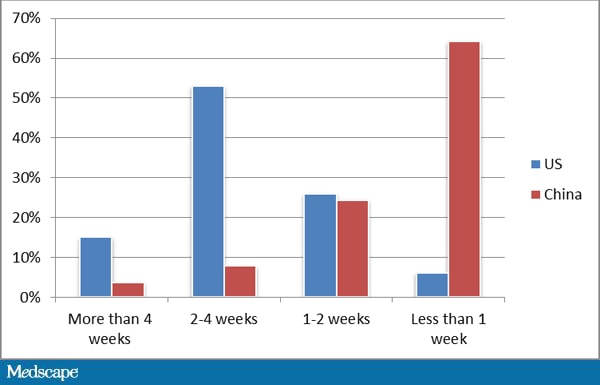
In looking at the amount of vacation that each population takes, however, Chinese physicians fare far worse, with 64% getting less than 1 week each year, compared with 5% of US physicians (Figure 4).


Figure 4. Amount of vacation taken by US vs Chinese physicians.

Volunteering and Religiosity

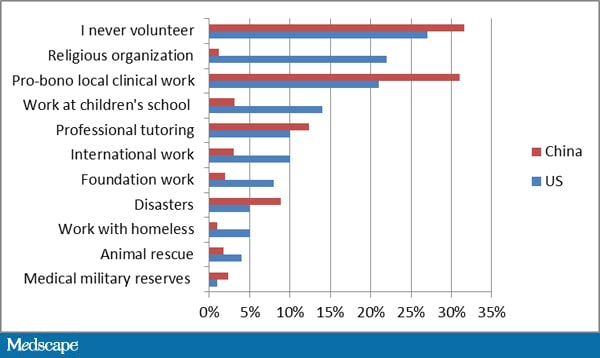
Volunteer rates are high among both US and Chinese physicians, with only 27% of US and 32% of Chinese physicians reporting that they don't volunteer at all. The type of volunteer work they do, however, differs in many ways (Figure 5). Chinese physicians are most likely to choose work that is related to their profession -- clinical work (31%) and tutoring (12%) -- rather than to personal interests. Work with religious organizations is popular among US physicians (22%) but basically nonexistent among Chinese physicians. This is not surprising considering their response to the survey question on religion, where 86.8% said that they did not have a religious or spiritual belief and 12% said that they did but did not practice. In comparison, three quarters of US physicians claimed a belief and 60% attended services.


Figure 5. Types of volunteer activities.

Health and Fitness

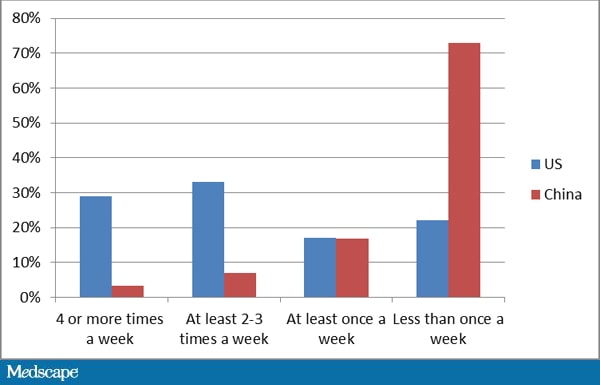
Chinese physicians exercise far less than their US counterparts (Figure 6), which could be explained at least partly by answers on some questions that indicate how little time they have for personal activities. On causes of burnout, "too many hours at work" is ranked the number 2 stressor, and to the question about vacation, only 12% of Chinese physicians responded that they are able to take more than 2 weeks off. One can surmise that if they work all the time and take little time off, exercise is an activity that gets sacrificed.


Figure 6. How often Chinese and US physicians exercise.
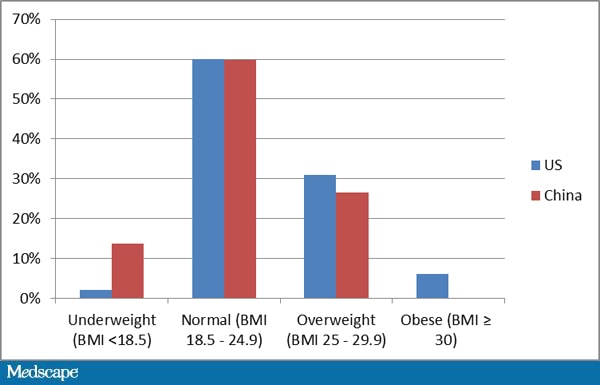
Still, Chinese physicians' responses to questions on physical well-being and health were mixed. For instance, they have a lower rate of overweight (26%) or obesity (0%) compared with US physicians (31% and 6%, respectively). They also have a higher rate of underweight than their US peers (14% vs 2%), but it is not possible to know whether this indicates a healthy diet or health problems (Figure 7).


Figure 7. US and Chinese physicians' BMIs.
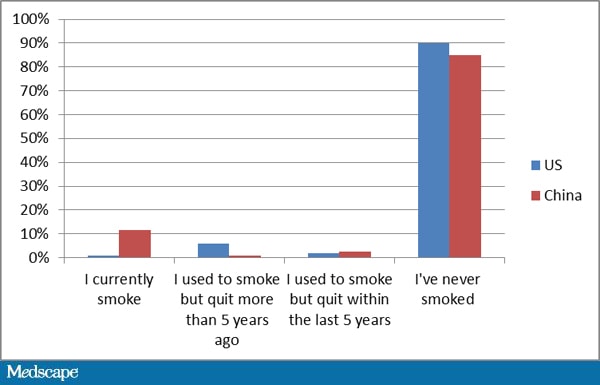
Chinese physicians tend to smoke a bit more than US physicians, although their rate of having never smoked is still very high (85% vs the US rate of 90%) (Figure 8).


Figure 8. History of smoking.
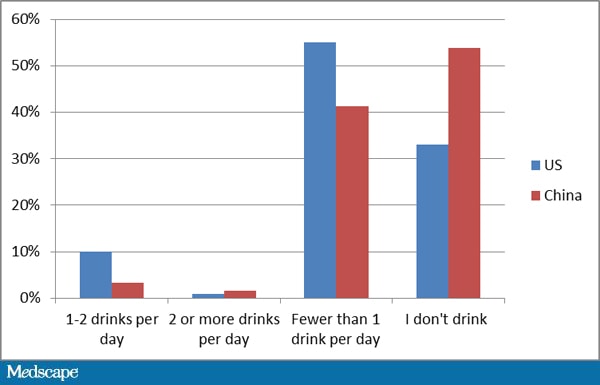
Chinese physicians drink much less than their US peers (Figure 9): 54% do not drink at all, compared with a third of US physicians. Also, 55% have fewer than 1 drink per day, compared with 41% of their US counterparts.


Figure 9. History of alcohol use.

Summary

A substantial percentage of both Chinese and US physicians report burnout. The problem is worse in China, however, where income levels are low and much more time is spent at work. Physician exercise levels and vacation time are very reduced in China compared with the United States, although alcohol use is low and there is less overweight and no obesity. In addition, Chinese doctors face deteriorating respect from patients and even violence directed against them, a result of higher medical costs, a negative media, and an association with pharmaceutical industry kickbacks. Various efforts are now being made in China to improve the situation, including reforming drug company reimbursement practices and undertaking experimental programs to increase income and improve care.

References

  1. Denoble D. Are China's doctors about to get a major bump? November 6, 2012. Asia Healthcare Blog.http://www.asiahealthcareblog.com/2012/11/06/are-chinas-doctors-about-to-get-a-major-salary-bump/ Accessed May 7, 2013.
  2. McGregor T. China's doctors worthy of higher pay. July 25, 2011. CRJ English.http://english.cri.cn/6909/2011/07/25/2743s650260.htm Accessed May 7, 2013.
  3. Yip WC, Hsiao W, Meng Q, Chen W, Sun X. Realignment of incentives for health-care providers in China. Lancet. 2010;375:1120-1130. Abstract
  4. [No authors listed]. Chinese doctors are under threat. Lancet. 2010;376:657. doi: 10.1016/S0140-6736(10)61315-3.http://www.thelancet.com/journals/lancet/article/PIIS0140-6736%2810%2961315-3/fulltext Accessed May 7, 2013.
  5. Yu D, Li T. Doctor stabbed to death two days after warning in The Lancet. Lancet. 2011;377:639. doi: 10.1016/S0140-6736(11)60231-6.
  6. Yu D, Li T. Facing up to the threat in China. Lancet. 2010;376:1823-1824. doi: 10.1016/S0140-6736(10)62161-7.http://www.thelancet.com/journals/lancet/article/PIIS0140-6736%2810%2962161-7/fulltext Accessed May 7, 2013.
  7. Feng Z, Li T. Guideline for preventing violence at hospitals in China (2011-2012). Am J Med Qual. 2013;28:169-171. doi: 10.1177/1062860612453194. Epub 2012 Aug 13.
  8. Alcorn T. China's new leaders cut off one-child policy at the root. 2013. Lancet. 381;983. doi:10.1016/S0140-6736(13)60697-2. http://www.thelancet.com/journals/lancet/article/PIIS0140-6736%2813%2960697-2/fulltext?rss=yesAccessed May 7, 2013.
 

About Me

My photo
Charleston; Myrtle Beach, SC; Raleigh-Durham, NC; Orlando, FL, GA, NC, SC, VA, FL, United States
https://www.saleeby.net https://www.CarolinaHolisticMedicine.com medical advisory board member UK's LDN Research Trust